Revolutionizing Longevity: 15-PGDH Inhibition and the Future of Knee Cartilage Regeneration in Thailand
Explore how 15-PGDH inhibition is transforming osteoarthritis treatment and why Thailand is becoming a leader in longevity and regenerative medicine research.

Modern regenerative medicine clinics in Thailand are increasingly involved in advanced joint care and research-informed therapies. All Images are conceptual visualizations and do not represent actual patient outcomes or guaranteed results. Individual responses to treatment vary.
Introduction
Longevity science is rapidly reshaping how we think about aging, injury, and recovery. Rather than simply managing symptoms, researchers are now targeting the biological processes that limit the body’s ability to repair itself over time.
One of the most promising developments in this field is 15-hydroxyprostaglandin dehydrogenase (15-PGDH) — an enzyme that increases with age and suppresses tissue regeneration. By inhibiting 15-PGDH, scientists have demonstrated restored repair capacity across multiple tissues, including muscle, bone, nerves, and most recently, knee cartilage.
In late 2025, a landmark study published in Science reported regeneration of functional cartilage in aged and injured joints using 15-PGDH inhibition in preclinical models. While still in the research phase, these findings signal a potential shift in how osteoarthritis (OA) may be treated in the future.
As interest in regenerative joint care grows, destinations such as Thailand have become increasingly relevant due to their advanced medical infrastructure, experience with biologic therapies, and global patient access.
The Science Behind 15-PGDH Inhibition
15-PGDH is responsible for breaking down prostaglandin E2 (PGE2), a molecule essential for tissue repair, inflammation control, and stem cell activity. With age, rising levels of 15-PGDH reduce PGE2 availability, impairing the body’s natural regenerative capacity.
Researchers have described 15-PGDH as a potential “gerozyme” — an enzyme that actively accelerates aging-related decline.
Preclinical studies have shown that inhibiting this enzyme can:
- Restore muscle strength and endurance in aged models
- Improve bone marrow function and nerve regeneration
- Promote healthier tissue repair across multiple systems
These findings position 15-PGDH inhibition as a promising strategy for extending healthspan, not merely treating isolated symptoms.
Breakthrough Research: Knee Cartilage Regeneration
In 2025, researchers demonstrated that inhibiting 15-PGDH could regenerate articular (hyaline) cartilage in aged mouse knees — the same cartilage type that naturally cushions human joints.
Key findings included:
- Increased cartilage thickness with durable hyaline structure
- Reduced osteoarthritis progression in injury models
- Improved joint movement and functional outcomes
- Positive regenerative responses in human osteoarthritic cartilage samples studied ex vivo
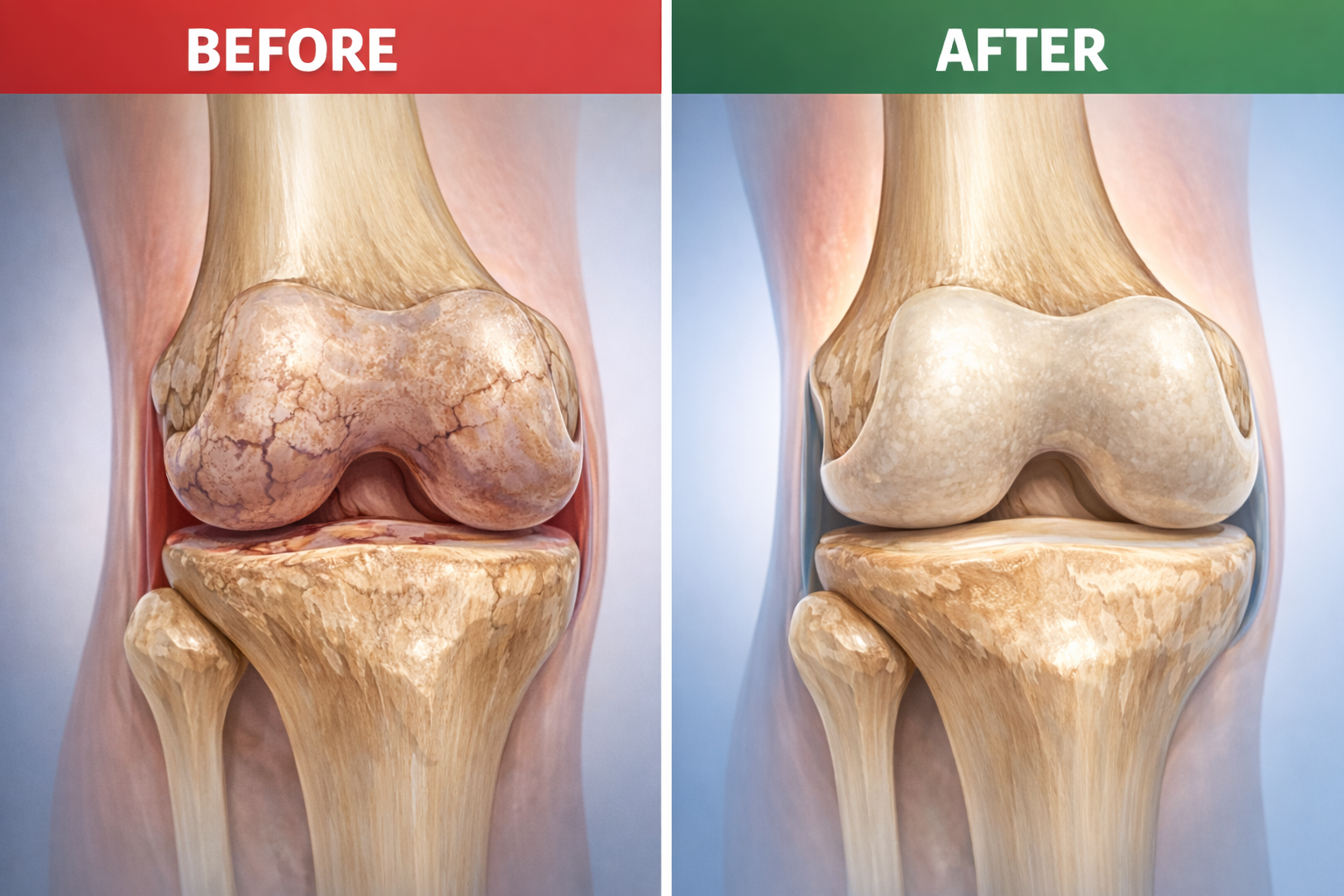 Conceptual comparison of cartilage degeneration versus regenerative outcomes associated with 15-PGDH inhibition in research settings.
Importantly, this approach is non-surgical and pharmacological, potentially offering future alternatives to invasive joint procedures. However, clinical application in humans remains under investigation.
How This Compares to Current Knee Treatments
| Treatment | Invasiveness | Regeneration Type | Typical Duration | Notes |
|---|---|---|---|---|
| 15-PGDH Inhibition | Low (research stage) | Hyaline cartilage (preclinical) | Unknown | Not yet clinically available |
| Arthroscopic Surgery | Moderate | Mostly fibrocartilage | Variable | Mechanical defect correction |
| PRP Injections | Low | Limited regeneration | 6–12 months | Symptom relief focused |
| Stem Cell Injections | Low–Moderate | Mixed regenerative response | 1–3+ years | Outcomes vary by protocol |
While arthroscopy and PRP remain widely used, biologic approaches aim to address the underlying tissue environment rather than simply managing damage.
Thailand’s Role in Regenerative Knee Care
Thailand has become a global destination for advanced medical and wellness care, treating international patients across orthopedics, rehabilitation, and regenerative medicine.
Key strengths include:
- Experience with non-surgical biologic therapies
- Internationally accredited hospitals and clinics
- Integrated rehabilitation and recovery programs
- Treatment costs often 30–70% lower than in Western countries
A number of hospitals and clinics in Thailand offer regenerative knee treatments such as stem cell and PRP-based protocols. These examples are provided for informational context only, not as endorsements or recommendations:
- Large tertiary hospitals with orthopedic and regenerative departments
- Specialized regenerative medicine clinics focused on joint care
- Integrated wellness centers combining rehabilitation and longevity medicine
Treatment suitability, safety, and outcomes depend on individual medical circumstances and should always be evaluated by licensed healthcare professionals.
Looking Ahead
15-PGDH inhibition represents a compelling direction for future joint care, with early clinical trials demonstrating safety in other age-related conditions and additional studies underway.
While these therapies are not yet clinically available, they reinforce a broader trend: regenerative medicine is shifting from symptom management toward biological repair.
For individuals exploring current regenerative options, Thailand offers established treatments that align with many of the same principles — supporting tissue repair, reducing inflammation, and minimizing invasive intervention.
At RejuFi, we follow developments in longevity and regenerative medicine closely, helping clients understand evolving options and navigate medical travel decisions with clarity and transparency.
If you’d like to learn more about regenerative knee care in Thailand or stay informed about future clinical developments, you’re welcome to contact our team for general guidance.
Disclaimer: This article is for informational purposes only and does not constitute medical, legal, or financial advice. RejuFi does not provide medical treatment or medical recommendations. Always consult qualified healthcare professionals before pursuing any treatment.